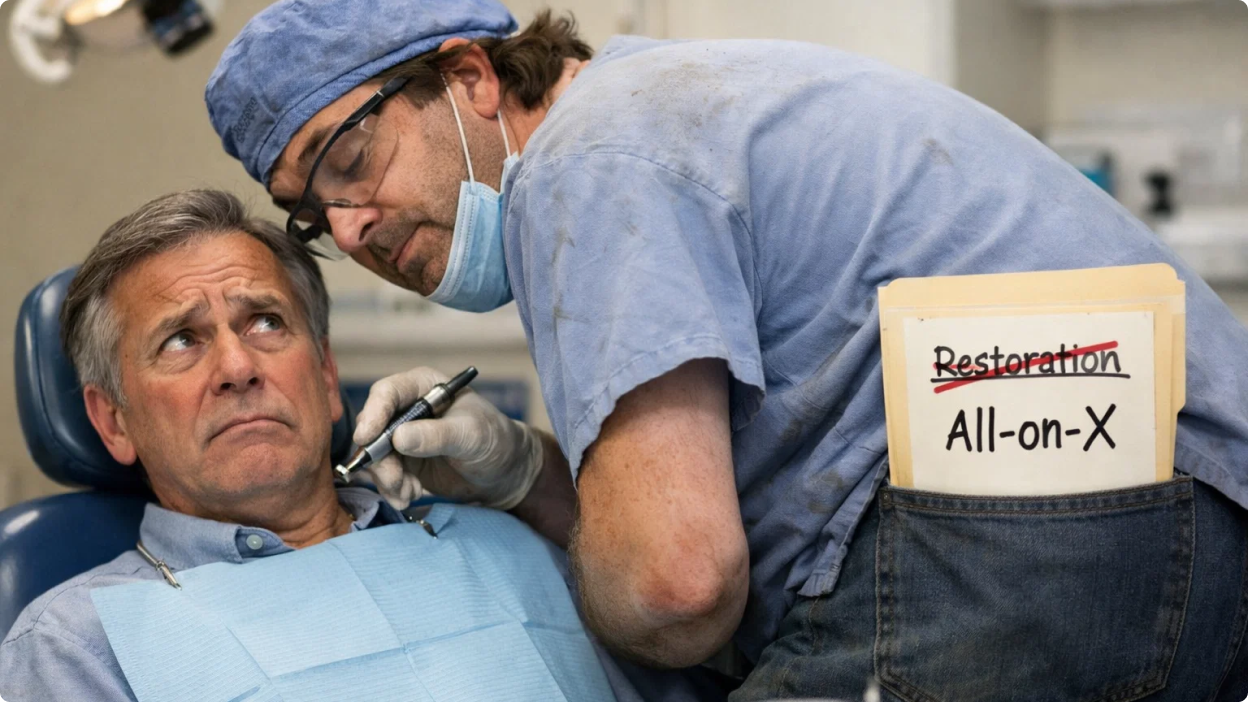
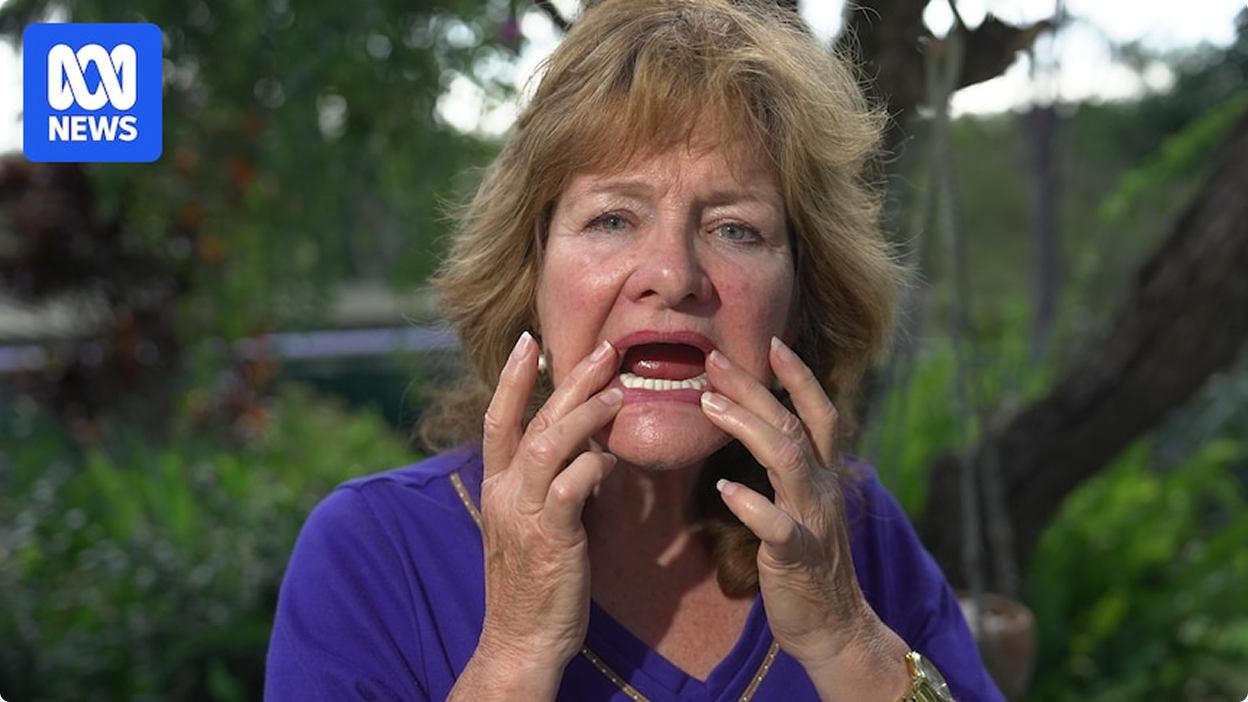
Dental clinic environment

industry research

Before you book: 13 dental clinic red flags and how to find a dentist you can actually trust

An independent guide to evaluating overseas dental providers and avoiding common industry traps that compromise patient safety and outcomes.

Portrait of William Holmes

William Holmes

Last updated December 24th, 2025

1. The danger of blind quotes (sales before diagnosis)

At most overseas clinics your first point of contact is rarely a doctor. Industry research has found that more often than not, patients are actually speaking to sales teams sitting in a call centre.

These salespeople often have strict monthly goals. It’s been found that most of them are giving a diagnosis and collecting deposits before they’ve even passed your information to a doctor to assess.

Their treatment plans and prices aren’t based on the best outcomes for patients. They’re based on how much money the salesperson feels they can extract.

This creates a dangerous gap between what they sell you and what a surgeon can actually do.

Dental consultation

The problem: Blind quote

If you message a clinic on WhatsApp and ask, "How much for a full mouth?" and they reply with "A guaranteed $15,000" without ever seeing an X-ray, be very careful. You are being sold to, not diagnosed.

At this stage, they have no idea what is going on inside your mouth. They don't know if your bone is strong enough for implants, if you have gum disease, or if the surgery is even safe for you.

The risk: Handcuffing the surgeon

The danger starts when you pay a deposit based on this blind quote. By the time you land at the clinic, The surgeon is under huge pressure to deliver the plan the salesperson promised.

If the sales agent promised "Teeth in 5 Days" but your bone is too soft for that, the surgeon has to make a bad choice: upset you (and lose the sale) or cut corners to meet the deadline.

Real storyA case was reported where a patient was sold dental bridges by a salesperson. When he arrived, the doctor realised his teeth were too weak for bridges and actually needed implants. The patient was only booked for a 5-day trip — too short for implants. To save the sale, the clinic panicked. They advised him to stop taking his heart medication without asking his cardiologist so they could rush the surgery. This dangerous advice landed him in the hospital.

What honest clinics do

Better providers work differently. They partner with independent facilitation companies which act as a “firewall” between sales pressure and medical safety. Here’s how they help:

  • No scan, no quote They can give you a rough estimate, but they won't give a formal quote until a dentist reviews your X-rays.
  • Worst-case pricing If there's any chance you need extra procedures, like a sinus lift or extra bone grafting, they include it in the price upfront.
  • The power to say no Their surgeons can refuse to do a treatment if it's not safe, even if it means losing money.

Questions to ask

  • “Will a dentist review my scans before I get a final price?”
  • “Does your quote include everything I might need, or will there be extra charges?”
  • “What happens if your surgeon finds problems after I arrive?”

2. The deposit trap

In the high-volume dental industry, the deposit isn't just a booking fee. It is a trap designed to lock you in. Many clinics ask for 10% to 20% of the total cost before you even get on the plane. Here’s what you should consider before paying:

Patient signing paperwork

The problem: Sunk cost

Once you have paid thousands of dollars in deposits and flown across the world, you are committed. You feel like you can't walk away.

This is usually when the upselling begins.

You might be sitting in the dental chair, perhaps after your first few injections, when they drop the bad news:

  • The plastic switch The cheap price was for temporary plastic teeth. If you want strong zirconia teeth, they suddenly demand an "upgrade fee" of thousands of dollars.
  • The soft bone excuse The surgeon claims your bone is "softer than expected." They insist you need a more expensive brand of implant to continue.
  • The hidden extras They left out costs like bone grafts from the first quote. Now they add $1,000 or $2,000 to your bill.

Because they already have your large deposit, you feel stuck. You have to pay or lose everything.

What honest providers do

Most providers will still require a small flat-rate deposit of $500-$1,000 to begin work on your booking. But here’s the difference:

  • Deposit holds The deposit doesn't go to the clinic right away. This means the clinic can't pressure you before you meet them.
  • Official contracts They give you a detailed contract, signed and officially stamped (legal requirement in Vietnam) before you pay the clinic anything. This contract locks in the price, materials, and warranty.
  • Split payments You pay 70% during the first trip (surgery) and keep 30% until the second trip (final teeth). By holding back money, you make sure the clinic works hard to make your final result perfect.
If a clinic's deposit is big enough to make you feel trapped, it's not a deposit — it's leverage.

Quick rule

Pay only a small, fixed booking fee until a surgeon has reviewed your scans and you have a stamped, itemised contract.

3. Price profiling & the hidden price list

A dirty secret in dental tourism is that prices often change based on who you are. In many clinics designed just for tourists, there is no fixed price list. Instead, the price is decided by a judgement call on you — your accent, your kindness, how you dress and how urgently you need your treatment could be used against you.

Two different patients have reported wildly different prices— $22,000 vs. $30,000—for the exact same work at the same clinic.

Pricing discussion

The problem: The two-menu system

Shady clinics keep the real price list hidden from you.

  • The foreigner tax When you ask about prices, you’re often given a menu made just for tourists. These prices are often inflated by 30% to 50% over the local rate.
  • The in-chair squeezeTheir favourite time to hand out extra charges is when you are vulnerable — mouth open, numbed up, and halfway through a check-up. This is when they decide what you can afford rather than what the procedure actually costs.
  • The hidden board In Vietnam, it is a strict legal requirement for medical facilities to display their price list for everyone to see. If a clinic can't point to a printed price list, they're breaking the rules.

What honest clinics do

In Vietnam good clinics do exist, but their reputation is amongst the local market, not tourists. Here’s how they’re different:

  • Servicing local Vietnamese patientsSeeing Vietnamese patients at the clinic is a great sign. Tourist clinics with over-inflated prices is the last place these people would consider.
  • Set price-list, same for everyoneAn honest clinic will have their prices displayed for everyone to see. Whether for locals or tourists the prices remain the same.
  • Clear currency All quotes should have the exact price in VND (Vietnamese Dong) and the closest conversion amount in AUD side by side.

Questions to ask

  • “Can you show me your official price list?”
  • “Do locals pay the same price I'm being quoted?”
  • “Are your prices in USD or AUD?”

4. All-on-4 vs. All-on-6: The insurance policy

One of the most common questions: "Why do I need six implants if everyone says four is enough?" Clinics push All-on-4 for two reasons: they can draw you in with a lower price, and it's easier for average surgeons to perform.

But from a bio-engineering view, All-on-4 has zero redundancy. Here’s what that means:

Implant planning

The problem: No backup plan

To replace a full set of 14 teeth, you need support at the back where you chew. With All-on-4, implants group at the front of your jaw. So, unlike All-on-6, adding back teeth is like a building a balcony with no support underneath.

If you chew hard on the back teeth, the leverage forces can snap the bridge or the implants.

All-on-4 failureIf just one implant fails, the whole system fails. You have to remove the bridge, do new surgery, wear a temporary for months, and pay for everything again. You're back to square one.

Implants are successful 95–98% of the time. But if you are in the unlucky 5% — maybe due to smoking or bad luck — the difference between 4 and 6 is huge.

What honest clinics do

A good clinic treats implants like mini-engineering projects. A good engineer always wants a safety margin where it’s possible.

  • All-on-6 redundancy If one implant fails in an All-on-6 system, it is rarely a disaster. Often, the failed implant can be removed while the bridge stays stable on the remaining five posts. You have "redundancy" to protect your investment.
  • The upper jaw rule The bone in your upper jaw is much softer than your lower jaw. Because of this, honest clinics will recommend All-on-6 for the upper arch, refusing to compromise on longevity just to quote an attractive low price.
  • The "no-brainer" pricing In Vietnam, many clinics treat All-on-6 as a "luxury upgrade," charging 30–50% more. An honest clinic will price All-on-6 fairly to keep the better option affordable.

5. The ghost surgeon & the surgery factory

In the race to offer the lowest price, some clinics have turned dental surgery into a factory assembly line. They stop treating you as a unique patient and start treating you like a number. Here’s how to spot them:

Clinic staff

Problem 1: One-size fits-all inventory

Some clinics buy implants in bulk orders of 10,000 units — all the exact same length and width — to get massive discounts.

Instead of assessing the unique, natural shape of your jaw and placing the optimal-sized implant, they'll ignore it completely to use their cheap stock.

Mystery brandsTo cut costs, some clinics use cheap copycat brands that aren't approved in Australia. If you go home with a obscure brand of implant, local dentists can't fix it. They won't have the right tools. You're on your own.

Problem 2: The ghost surgeon

Many clinics feature a famous "Master Surgeon" or Professor on their website to get your attention. But here’s what they don’t tell you:

  • The switch The famous doctor might own the clinic, but they aren't always the one doing the work.
  • The fake dentist scandal Recent investigations found clinics, like SQ Dental, are advertising credentials that could not be verified. In some cases, they were using someone else's medical license to operate illegally.
  • The reality When you are sedated, the person actually drilling into your jaw could be a fresh graduate or a junior staff member. You are paying for the master, but getting the apprentice.

What honest clinics do

  • Approved hardware They use implant brands that are TGA-approved in Australia (like Straumann, Nobel Biocare, Dentium, Osstem).
  • Verified surgeons They give you names and registration numbers you can verify with national dental boards.
  • Specialised teams They use separate specialists for surgery, crowns, and root canals—not one general dentist doing everything.
  • Proof you can take home They send you home with a full English medical report and implant serial numbers you can verify.

Questions to ask

  • “What brand of implants do you use, and are they approved in Australia?”
  • “Can I verify my surgeon's credentials?”
  • “Will the surgeon shown on your website personally do my procedure?”

6. Free-hand vs. computer guided surgery

The debate over guided vs. free-hand surgery is like the debate in aviation: experienced pilots can fly manually, but technology reduces errors.

Surgical planning

The problem: Free-hand drilling

When a surgeon drills without a guide, they're guessing:

  • Where to start
  • What angle to use
  • How deep to go
  • How to avoid nerves

Even expert hands show 1-2mm position errors and 3-5 degree angle errors.

Big riskThe main nerve runs through your lower jaw. Drilling too deep can cause permanent facial numbness.

The wobble effectWhen a human hand holds a drill, it wobbles slightly. This creates holes that are oval-shaped instead of perfect circles. The bone can't heal tightly against the implant in these gaps.

The fake guide trickSome clinics claim "guided surgery" but only use simple plastic templates that show where to start. Once the drill enters bone, the surgeon is back to guessing.

What honest clinics do

Fully guided surgeryThey use custom 3D-printed guides that lock the drill in place. It controls:

  • Position (within 0.2mm accuracy)
  • Angle (less than 2 degrees error)
  • Depth (stops at the right spot)

Digital planningBefore you arrive, they:

  • Combine your bone scans with face scans
  • Digitally design your final smile on a computer
  • Calculate the perfect implant positions to support that smile
  • Create a surgical guide based on this plan
  • Perform your surgery virtually on computer days before you arrive

Questions to ask

  • “What type of surgical guide do you use?”
  • “Will you show me the digital plan before the procedure?”

7. The "plastic" scam & the "Trivago Teeth" trap

Once the implants are in your jaw, the most important thing is the material of the teeth attached to them. This is where clinics save thousands of dollars — often by putting materials in your mouth that look fake or will break.

Dental prosthetics

Problem 1: Fancy plastic (PMMA)

To get the price as low as possible, some clinics sell PMMA (Acrylic) as a permanent solution. They might give it a fancy name like "High-Impact Polymer" or "Composite Hybrid" to make it sound high-tech.

The realityIt is basically just high-grade denture plastic.

The smell testPlastic is like a sponge. Over 3 to 5 years, it soaks up saliva, food particles, and bacteria. Eventually, the bridge will actually smell bad and change colour. Plus, because it is brittle, it often snaps when you chew. It is not a permanent solution.

Problem 2: Trivago Teeth (unlayered Zirconia)

Zirconia is super strong. But to save money, budget clinics machine the entire bridge from one solid block of one colour.

The dead tooth lookReal teeth have a gradient—they're white at the centre but get slightly see-through at the tips. Cheap zirconia is one flat colour all the way through.

Everyone will know you had work done because it looks like bathroom tile, like the infamous Trivago ad guy.

Why clinics use itNice zirconia with hand-layered porcelain takes 8-12 hours of skilled work. Machine-cut zirconia takes 2-3 hours.

What honest clinics do

Hybrid design is the best option:

  • Titanium frame Custom metal structure that screws into implants.
  • Layered zirconia crowns Individual crowns with natural colour gradients, matching real teeth.
  • Porcelain layering Clinics and labs that go the extra mile hand-apply porcelain on the front teeth to make them look hyper-realistic.

Why it's better:

  • Can be repaired If you chip a tooth 5 years later in Sydney, any local dentist can replace just that crown ($300-500) instead of the whole bridge ($15,000+).
  • Looks real Combination of layered zirconia and porcelain mimics natural teeth.
  • Local service Any Australian dentist can work on it.

Questions to ask

  • “What material is the final teeth—PMMA, plain zirconia, or layered hybrid?”
  • “If I chip a tooth in 5 years, can a local dentist fix just that tooth?”
  • “Will the front teeth have hand-layered porcelain?”

8. Glued vs. screwed: can it be removed?

In many budget dental destinations — particularly Turkey and parts of India — "cementing" (gluing) full arches onto implants is standard practice. Why? Because it is faster, cheaper, and allows a sloppy surgeon to hide mistakes.

If an implant is placed at a bad angle, they can simply glue a tooth over it to hide the crookedness. However, for you, a cemented bridge is a ticking time bomb.

Dental bridge work

Problem 1: The toxic glue risk

When a bridge is glued onto implants, excess cement often oozes below the gum line where it cannot be seen or cleaned.

The infection riskThis hidden cement irritates the soft tissue. Over time, it becomes a breeding ground for bacteria, leading to peri-implantitis (infection of the gum and bone around the implant). This can cause bone loss and eventual implant failure years after the surgery.

Problem 2: Destructive removal

Implants are not "set and forget." You may eventually need a deep clean, a gum check, or a minor repair.

The nightmareA cemented bridge is essentially permanent. If you have an issue back in Australia, a local dentist cannot simply take it off to look underneath. To access the implants, they often have to physically drill through and destroy your $15,000 bridge. A minor gum issue becomes a total financial loss.

What honest clinics do

Screw-retained teeth: The teeth contain screw channels. Small titanium screws pass through the teeth and thread into the implants. Access holes are sealed with tooth-coloured filling.

Benefits

  • Any dentist can remove the filling, access the screw, and take off the teeth in 20-30 minutes.
  • Bridge can be removed, cleaned, and replaced unlimited times.
  • No trapped cement causing infections.
  • Can't hide mistakes—screw retention requires higher surgical precision. No glue is used to hide poor work.

Questions to ask

  • “Will my bridge be glued or screwed?”
  • “If I need maintenance in 5 years, can the bridge be removed without destroying it?”

9. Ignoring biology to rush the healing

In the world of dental tourism, speed is often sold as a feature. You will see ads promising "Teeth in 3 Days" or "A Full Smile in a Single Trip." While this is great for the clinic's profit margins (because they can get you in and out quickly), it is often disastrous for your health.

Human biology follows set timelines that can't be rushed, here’s why:

Recovery and healing

Problem 1: The swelling gap

When you have teeth pulled and implants placed, your gums swell up. This is a natural reaction to surgery.

The consequenceIf a clinic rushes to fit your final bridge while your gums are still swollen (Day 3–5), the fit will look perfect — for about two weeks.

The resultOnce the swelling goes down, your gums will shrink back. This leaves a massive, unhygienic gap between your new teeth and your gum line. It creates a "food trap" that harbors bacteria and rots the bone around your new implants.

Problem 2: Biology vs. marketing (the active surface myth)

Some implant brands market "active surfaces" that claim to drastically speed up bone healing. Clinics use this as an excuse to rush the process.

The realityYou cannot bribe human biology. Bone generally takes 3–4 months to fuse to titanium.

The scienceWhile active surfaces sound good in a brochure, the science is actually quite weak. Only about 30% of independent studies show a clear benefit compared to standard implants. The rest show little to no difference. Relying on a marketing claim to rush a medical procedure is a gamble.

The riskIf you chew on an implant before it has fused, you create "micromotion" (tiny movements). This prevents the bone from locking onto the screw and causes scar tissue to form instead. An implant surrounded by scar tissue will fail.

What honest clinics do

An honest clinic will insist on a minimum of 10–14 days for the first trip.

Why?The surgery itself might only take 3–5 days, but you’re required to stay longer for monitoring to ensure you are safe from infection before you get on an 8-hour flight home.

The "test drive" (trip 2)When you return for your final teeth, bad clinics try to fit them immediately to get you out the door. A good clinic should produce a "Test Drive" set — an exact replica of your final teeth made of high-quality plastic. You wear these for a few days to check the look, speech, and bite. The final Zirconia set should only be made once you have signed off on the test drive.

Questions to ask

  • “How long do I stay after surgery?”
  • “Will I try test teeth before final fitting?”
  • “What happens if I don't like the test teeth?”

10. Temporary dentures vs. rigid splinting

The temporary teeth you wear during healing can make or break your implant success. Some clinics cut costs here, sending patients home with cheap options that lead to complications. Here's what to look for:

Temporary dentures

The cheap way: Removable dentures

Many clinics send patients home with a standard removable denture to wear while their implants heal. This is often just a cost-cutting measure.

The experienceThese are old-fashioned false teeth. They are bulky, cover the roof of your mouth, and require messy glues to stay in.

The riskBecause they sit on top of your gums, they can rub and cause pressure spots. They are far less comfortable than having fixed teeth.

What honest clinics do: Rigid splitting

When bone is strong enough (about 90-95% of cases), a fixed temporary bridge that is screwed directly into the implants will provide better results.

How it worksConnecting all implants with a rigid bridge works like a cast on a broken bone—it stops individual implants from micro-movements, which significantly improves the chances of the bone healing tightly around them.

Important material noteFor overseas patients, the temporary must be reinforced with titanium (metal bar inside plastic). Plain plastic can crack during sleep grinding. A fractured temporary while 4,000+ km away is less than ideal.

The 5-10% exceptionIf bone is too weak, good clinics refuse to place fixed teeth despite patient disappointment. This protects implant survival.

Questions to ask

  • “Will I have removable dentures or fixed temporary teeth?”
  • “If fixed, is it reinforced with metal?”
  • “When would you refuse to place fixed teeth?”

11. The "bad bone" upsell & hidden extras

The low price you see on social media — often as low as $10,000 — is almost never the final price you pay at a high-volume tourist clinic. It is merely an "entry fee" to get you into the dental chair. Once you are there, the "Death by a Thousand Cuts" begins.

Consultation costs

Problem 1: "Soft bone" upsell

You booked the package based on a standard, affordable implant brand. But once you are in the chair, the surgeon shakes his head: "Your bone is softer than we thought. The standard implant won't work."

The upsellThey sweetly suggest you must upgrade to a "Premium Active Surface" implant to prevent failure.

The realityThis "medical necessity" is often just a sales tactic. It instantly adds $5,000 to $10,000 to your bill. Because you are terrified of the surgery failing, you pay it.

Problem 2: The A La Carte menu from hell

To keep the advertised price low, competitors strip out essential medical requirements, hiding costs that are obvious on any X-ray:

  • The grafting trap If you need bone grafting or a sinus lift, many clinics treat this as a surprise extra, charging $500 to $1,000 per site.
  • The "fear tax" Almost every patient wants IV Sedation (Twilight Anesthesia) for major surgery. Clinics often charge hundreds extra for this comfort.
  • The currency trick A common dirty trick is quoting a figure like "15,000" and waiting until payment day to clarify that they meant USD, not AUD — a massive 50% price hike. Then they'll negotiate it down and act like they did you a favour.

What honest clinics do

Honest clinics believe that surgical surprises should be their problem, not yours.

  • Risk absorption They provide "Worst-Case Quotes." If the surgeon discovers you need a sinus lift or bone grafting during the surgery, the clinic absorbs that cost. You do not pay a cent extra.
  • Inclusions, not add-ons Full-arch pricing should include IV Sedation, all necessary extractions, and all soft tissue work.
  • Engineering vs. upselling Skilled surgeons use advanced techniques (like tilting implants) to avoid the need for bone grafting in the first place. Skilled professionals won’t use your anatomy as an excuse to open your wallet.

Questions to ask

  • “Does your quote include bone grafting if my scan shows I need it?”
  • “Does your price include IV sedation?”
  • “Can you guarantee this is the maximum I'll pay?”

12. The "in-house lab" myth

In a rush to get you home, the connection between the dentist and the technician making your teeth is critical. Many clinics claim to have an "in-house lab" to sound premium, but the reality is often different.

Dental lab

The problem: The factory queue

Recent research has found clinics are claiming their lab is "in-house," when really they own just a tiny share of a massive commercial lab that serves 20 other clinics. They aren't the owners; they are just another customer in the queue.

The riskIf your final bridge doesn't fit perfectly, sending it back to an outside factory takes days. A dishonest dentist, under pressure to get you to the airport on time, will often force the bad fit rather than wait. You end up with teeth that are uncomfortable or bite weirdly.

The best clinics in Vietnam: Vertical integration

There are only a handful of the clinics that don’t just "use" a lab; they own the building. It is a dedicated facility with 10–15 full-time technicians who work exclusively on their patients' cases.

  • Surgeon oversight Lead surgeons spend hours every week physically inside the lab, checking the shape and colour of teeth before they ever reach the dental chair.
  • Precision speed If you try in your teeth and want them 1mm shorter, their lab can adjust and re-glaze them in hours, not days. The fit is never compromised just to meet your flight schedule.

Questions to ask

  • “Do you own 100% of the lab?”
  • “How many other clinics does your lab work for?”
  • “If my test teeth need changes, how long does it take?”

13. Doesn’t say “no” to unsafe candidates

In a profit-driven industry, turning away a patient means losing $15,000-25,000. This creates huge pressure to accept high-risk patients who should be refused.

Patient consultation

The Problem: The yes man

The reality is, not everyone is a safe candidate for surgery. Recent reports have found clinics are taking on high-risk patients and putting them in harms way just to make a profit.

The riskMany clinics will happily operate on heavy smokers or people with uncontrolled diabetes just to secure the booking. They know the implants might look okay for a few months, but they will likely fail a year later when you are back in Australia and out of warranty.

What honest clinics do (corporate vs. doctor-owned)

The biggest difference between a corporate clinic and a doctor-owned clinic is how they view a rejected patient. Saying "No" isn't about being difficult; it is about avoiding a medical disaster.

Honest, doctor-owned clinics turn down patients every single day.

Real-world examples:

  • The smoker Smoking restricts blood flow, which is exactly what your bone needs to heal around an implant. Honest dentists will advise you to stop smoking for a specific period around the surgery. If you cannot commit to this, they may refuse to operate. They would rather lose the sale than give you implants that are destined to fall out.
  • The diabetic High blood sugar feeds bacteria and stops wounds from healing. If your blood sugar isn't controlled, you're not currently a suitable candidate for implants. An honest dentist will ask you to work with your GP to get your levels stable first. They will wait until you are healthy rather than risking an infection that could destroy your jawbone.
  • The gum disease patient You cannot build a new house on an unstable foundation. If you have active gum disease, honest dentists won't just drill implants right in. They will require you to get a deep clean and stabilise your gums first — even if that means delaying your trip.

Questions to ask

  • “When would you refuse to treat me?”
  • “Do I need to meet medical requirements before surgery?”
  • “What's your policy on smokers and diabetics?”
  • “Have you ever turned down a patient, and why?”

Ready for a Realistic Assessment?

Get a Transparent, All-Inclusive Estimate

Dental tourism doesn't have to be a gamble. You don't need to accept "plastic teeth," "hidden costs," or "sales pressure" just to save money.

Further reading

More articles & guides

Browse our full library of pricing breakdowns, materials explainers, and planning guides.